i30/i35
Designed for fitness and healthcare professionals
Optimized Body Composition Analyzer
•i30 / i35 Measurement Frequencies (kHz)
a) i30 : 5, 50, 100
b) i35 : 5, 50, 100, 250
• Power Specifications: Input – AC 100~240V, 50~60Hz, 1.5A / Output – DC 12V, 5A
• Input interface: Key pad, Touch screen
• External Interfaces: RS232 (9-pin serial cable) 1EA, USB Host 2EA, Mini-USB 1EA, LAN
1EA
• Display: 7 inch (600 x 1024), Color Touch LCD
• Dimensions: 360mm(W) x 559mm(D) x 1077mm (H)
• Weight: Approx 17.5 kg
• Measurement Time: Approx 30 secs
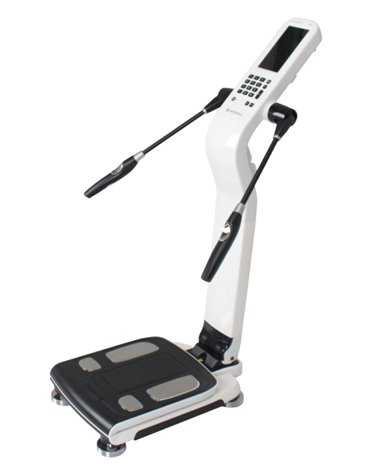
Key Features:
Blind Mode
Hides weight and body fat percentage on the display to protect personal information.
Ergonomic design for comfortable measurement posture
The wide rotation range of the handles and rotatable hand electrodes help users maintain a comfortable and accurate measurement posture.
Easy Operation via Touchscreen
Simple operation through keypad and touchscreen interface.
User-Friendly interface
Built-in display shows measured body composition information in an easy-to-understand format.
Convenient User Information Management
Personalized information management is possible using particular PC software.
Age-Specific Analysis
Provides analysis results tailored for both adults and children.
Compact Foldable Design
The foldable structure and lightweight design make it easy to store and transport.
Overview
What is Body Composition Analysis?
Body composition refers to the four main components that make up the body: protein,
body water, fat, and minerals, all of which sum up to the total body weight. Body
composition varies significantly with age, gender, and physical characteristics, closely
relating to health issues. Body composition analysis helps you understand what your body
is made of through an accurate assessment of these components, aiding in health
management by providing insights into muscle development, nutritional balance, and
obesity levels. Body composition analysis offers valuable clinical insights for diet patterns
or preventing diseases, making it equally useful in formulating dietary plans and aiding
patient recovery.
How is the Body Composed?
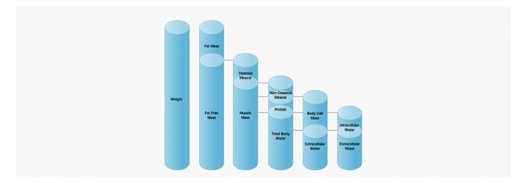
The body composition elements are illustrated in the diagram below. All body composition
elements must maintain a balanced ratio, and it is essential to keep this balance for
healthy body management.
Why is Body composition Analysis Important?
Healthy individuals generally maintain body composition within standard ranges. When
this balance is disrupted, it can lead to various diseases or a decline in health. Obesity, in
particular, occupies a significant portion of our concerns from the perspective of body
composition.
According to the World Health Organization (WHO), obesity requires more clinical and
internal approaches rather than being seen simply as a matter of appearance. Obesity is
increasingly recognized as being related to internal issues such as chronic diseases, heart
disease, hypertension, and diabetes, leading to greater clinical attention. Therefore, a
careful clinical approach is necessary for more rigorous body management.
A common symptom related to mineral issues is osteoporosis, which is prevalent among
postmenopausal women. Osteoporosis typically occurs due to a lack of minerals in the
bones and can be diagnosed using specialized bone density measurement devices such as
DEXA. The loss of minerals in the bones is closely related to muscle mass, and maintaining
adequate muscle mass through a proper exercise regimen can help prevent osteoporosis.
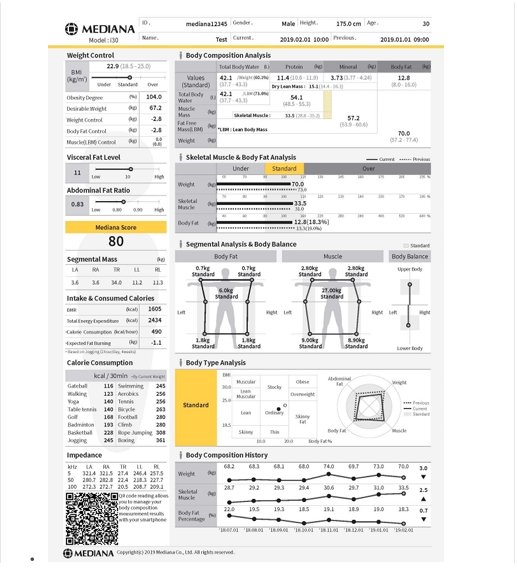
Result Sheets
• i30 Child Result
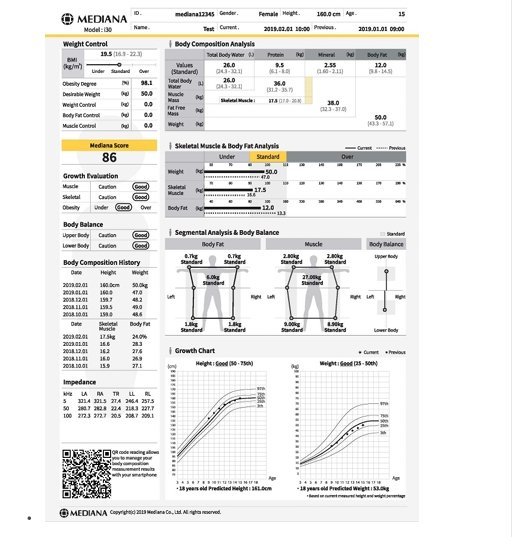
• i30 General Result Sheet
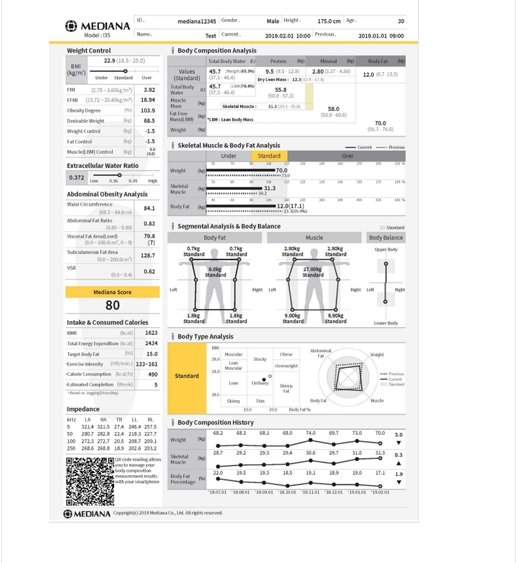
•i35 Child Result
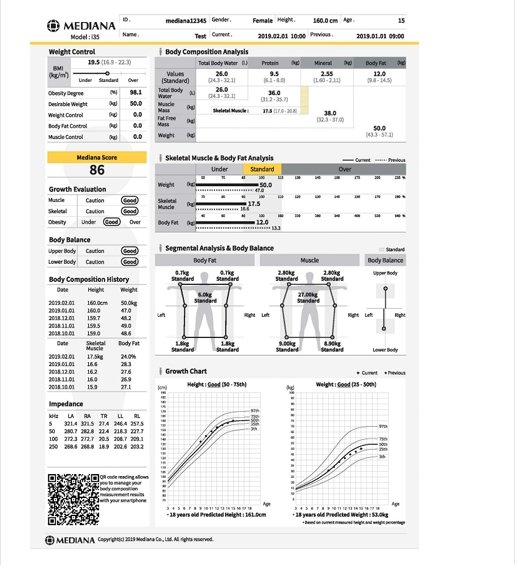
•i35 General Result Sheet